

Treasures of Moonstone Guesthouse
The Grand Rococo Mirror

One of Moonstone Boutique Living's most treasured historical pieces is this magnificent original Rococo mirror, an authentic work of European craftsmanship that has gracefully endured through the centuries.
Expertly hand-carved from solid wood and finished in rich gilt, the mirror showcases the lavish artistry that made the Rococo period one of Europe's most celebrated decorative movements. Its elaborate openwork crest, flowing acanthus leaves, scrolling foliage and delicate floral ornamentation are all executed by hand, reflecting the extraordinary skill of the master craftsmen of the era.
Originally created for a distinguished residence, mirrors of this calibre were considered symbols of prestige and refinement. Before the advent of electricity, they were strategically positioned within grand salons, entrance halls and drawing rooms to reflect candlelight, enhancing both the brightness and magnificence of the surrounding interior.
Today, this remarkable mirror continues to serve its original purpose—welcoming guests into an atmosphere where timeless elegance meets contemporary comfort.
A Masterpiece of European Craftsmanship
The mirror is a fine example of the Rococo artistic tradition, a style that flourished throughout Europe during the eighteenth century. Characterised by movement, asymmetry and motifs inspired by nature, Rococo represented a departure from the heavier Baroque style, embracing grace, fluidity and lightness.
Its richly carved frame incorporates:
- Hand-carved floral garlands
- Flowing Rococo scrollwork
- Acanthus leaves, symbolising endurance and immortality
- Delicate pierced cresting
- Traditional water-gilded finish
- Original mirror plate
Every carved detail demonstrates the remarkable craftsmanship achieved entirely by hand, long before modern machinery.
Historical Significance
During the eighteenth century, mirrors such as this were among the most luxurious furnishings a household could own. The production of large mirror glass was exceptionally expensive, while the intricate gilded frames required hundreds of hours of skilled carving and finishing by specialist artisans.
Such mirrors adorned aristocratic residences, noble palaces and prestigious townhouses throughout Europe, reflecting both wealth and impeccable taste.
Did You Know?
The Rococo style emerged in France during the reign of King Louis XV and soon spread across Italy, Austria, Germany and the rest of Europe. Inspired by nature, music and movement, Rococo became synonymous with elegance, sophistication and artistic freedom.
Mirrors from this period were designed not only as decorative objects but also to maximise natural light and candlelight, making interiors appear brighter and more spacious.
Preserved for Future Generations
At Moonstone Boutique Living, we believe that every historic object tells a story. This original Rococo mirror has been carefully preserved so that guests can appreciate both its artistic beauty and the centuries of history it represents.
More than simply reflecting its surroundings, it reflects the heritage, craftsmanship and timeless elegance that define the unique character of Moonstone Boutique Living.
Collection Value: Museum-quality original 18th-century Rococo giltwood mirror.
Significance: An exceptional example of European decorative craftsmanship preserved as part of the Moonstone Boutique Living Heritage Collection.
Arloġġ tal-Lira -The Maltese Wall Clock

One of the most treasured pieces in the Moonstone Boutique Living Heritage Collection is this magnificent original Maltese Arloġġ tal-Lira—an authentic symbol of Malta's artistic heritage and master craftsmanship.
Entirely handcrafted, this elegant wall clock represents centuries of Maltese tradition, combining the skills of cabinetmakers, woodcarvers, gilders, painters and clockmakers into a single masterpiece. More than a timepiece, the Arloġġ tal-Lira is regarded as one of the finest examples of traditional Maltese decorative arts and remains one of the island's most sought-after antiques.
A True Maltese Masterpiece
Unlike many antique clocks inspired by foreign styles, the Arloġġ tal-Lira is a distinctly Maltese creation. Although influenced by European Baroque and Rococo design, it developed its own unmistakable identity and became a hallmark of Maltese homes from the 18th century onwards.
These clocks were once proudly displayed in noble residences, village homes and prestigious townhouses throughout the Maltese Islands, symbolising prosperity, craftsmanship and family heritage.
Artistic Features
This exceptional clock displays many of the classic characteristics of the traditional Arloġġ tal-Lira:
- Hand-painted floral decorations
- Traditional Roman numeral dial
- Decorative painted landscape at the centre of the dial
- Hand-crafted steel hands
- Richly painted wooden case with gilt ornamentation
- Hand-carved crest and decorative finials
- Mechanical brass movement operated by winding
Every detail reflects the remarkable craftsmanship of Malta's master artisans, where each clock was individually made rather than mass-produced.
Why Is It Called "Tal-Lira"?
The origin of the name "Tal-Lira" has long been debated.
A popular tradition holds that these clocks were once sold for one Maltese pound ("lira"), giving rise to the name. However, historians such as Dr Giovanni Bonello have questioned this explanation, noting that the name may instead derive from the Italian term orologio a lira, a style of clock that was known in Europe when Maltese clocks were developing. Whatever its true origin, the name Arloġġ tal-Lira has become inseparable from this uniquely Maltese timepiece.
A Symbol of Maltese Heritage
The Arloġġ tal-Lira is considered one of Malta's national treasures. So significant is its cultural importance that it has been the subject of museum exhibitions, academic research and specialist conservation projects dedicated to preserving these remarkable clocks for future generations.
Today, original examples are highly prized by collectors both in Malta and abroad, admired for their beauty, rarity and historical significance.
Preserved at Moonstone Boutique Living Guesthouse
At Moonstone Boutique Living, this original Arloġġ tal-Lira stands as a tribute to Malta's rich artistic and cultural legacy.
More than an antique, it is a living piece of Maltese history—reflecting the craftsmanship, creativity and traditions that have shaped the island for centuries. We are proud to preserve and share this remarkable treasure with our guests, offering them not only a place to stay but an opportunity to experience Malta's heritage up close.
Technical Overview
Name: Arloġġ tal-Lira (Maltese Wall Clock)
Origin: Malta
Period: 18th–19th Century
Style: Traditional Maltese decorative art with Baroque and Rococo influences
Materials:
- Hand-crafted wooden case
- Hand-painted decoration
- Gilded ornamentation
- Brass mechanical movement
- Hand-painted dial
- Steel hands
Significance: An exceptional example of Malta's traditional clockmaking and decorative arts, preserved as part of the Moonstone Boutique Living Heritage Collection.
Collection Value: Museum-quality original Maltese Arloġġ tal-Lira from the late 18th / early 19th century.
Landscape by Gaspard Dughet (1615–1675)
A Masterpiece of the Classical Landscape Tradition
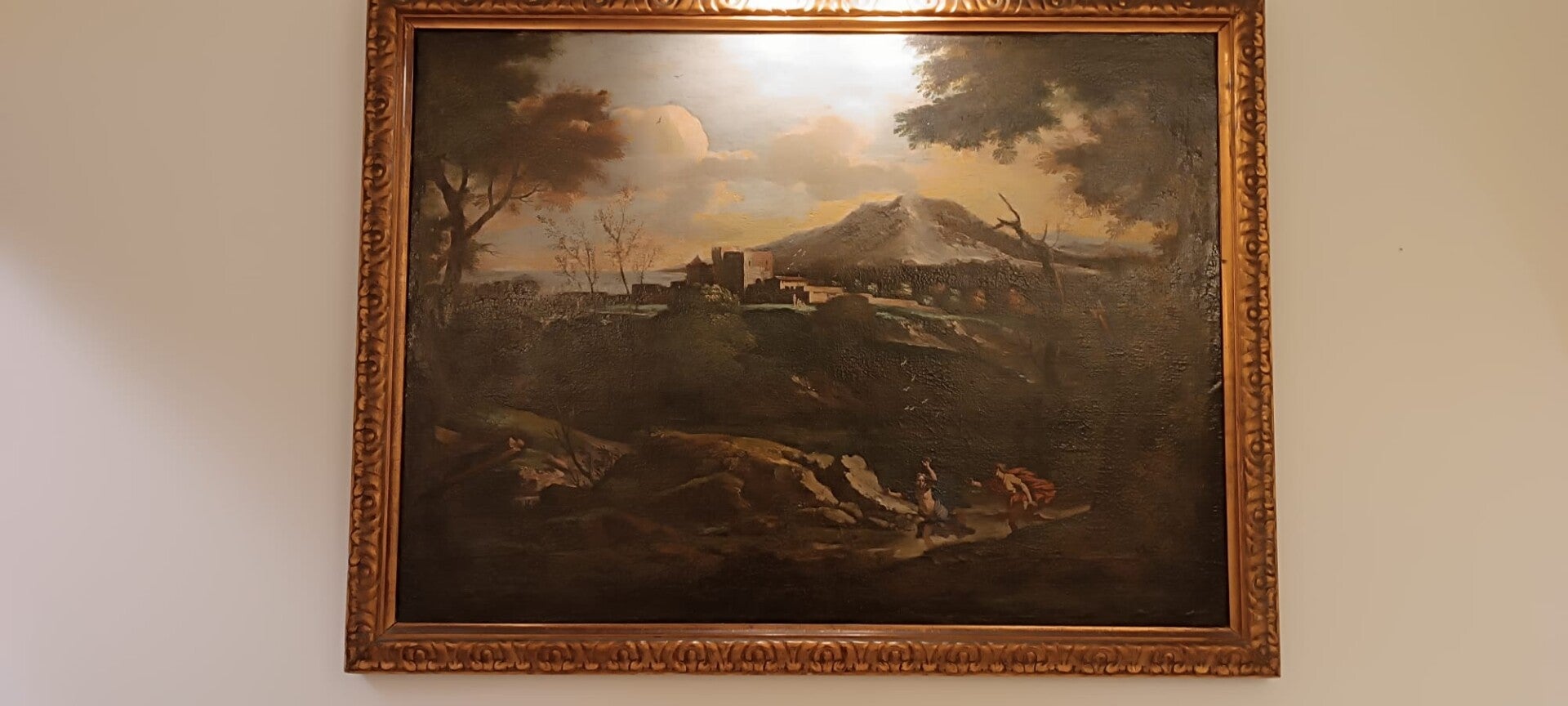
Among the most distinguished treasures of Moonstone Boutique Living is this remarkable original oil painting by Gaspard Dughet (1615–1675), one of the greatest landscape painters of the seventeenth century.
Celebrated for his poetic depictions of the Italian countryside, Dughet transformed landscape painting into an art form that combined the grandeur of nature with the harmony of classical composition. His works became highly sought after by European nobility, collectors and patrons, and today they are represented in many of the world's leading museums and historic collections.
This magnificent painting reflects Dughet's extraordinary ability to create atmospheric landscapes where mountains, forests, architecture and human figures exist in perfect balance. The dramatic sky, distant fortified settlement and winding foreground path invite the viewer into an idealised world inspired by the Roman Campagna and the timeless beauty of Italy.
About the Artist
Born in Rome in 1615 to French parents, Gaspard Dughet, also known as Gaspard Poussin, became one of the leading landscape painters of the Baroque period. He was the brother-in-law of the celebrated French master Nicolas Poussin, whose influence helped shape his artistic vision.
Rather than focusing on religious or mythological scenes, Dughet devoted his career to landscape painting, capturing nature with remarkable sensitivity and balance. His works were commissioned by princes, cardinals, noble families and distinguished collectors throughout Europe.
Today, paintings by Gaspard Dughet are housed in some of the world's most prestigious museums, including:
- The Louvre, Paris
- The National Gallery, London
- The Metropolitan Museum of Art, New York
- The Museo del Prado, Madrid
- The State Hermitage Museum, Saint Petersburg
Artistic Features
This exceptional painting displays the qualities that define Dughet's celebrated style:
- Original oil on canvas
- Classical Italian landscape
- Dramatic mountain scenery
- Atmospheric Baroque lighting
- Harmonious composition
- Finely painted architectural features
- Delicate figures bringing life and movement to the landscape
- Rich natural colour palette
- Original carved and gilded frame
Every brushstroke reflects Dughet's mastery of perspective, atmosphere and light, creating a scene that remains captivating more than three centuries after it was painted.
Historical Significance
During the seventeenth century, landscape painting reached new artistic heights through masters such as Gaspard Dughet. His paintings influenced generations of European artists and established the Classical Landscape as one of the most admired artistic genres of the Baroque era.
Today, original works by Dughet are highly prized by collectors, museums and art historians, representing both exceptional artistic achievement and an important chapter in European cultural history.
Provenance
This original painting forms part of the private Heritage Collection of Moonstone Boutique Living and has been carefully preserved as an authentic work by Gaspard Dughet (1615–1675).
For generations, works such as this have been admired not only for their artistic excellence but also for their historical importance. Its presence at Moonstone Boutique Living reflects our commitment to preserving cultural heritage and sharing it with guests from around the world.
As you walk through our guesthouse, you are not simply viewing a painting—you are standing before a work created over three centuries ago by one of the Baroque period's most celebrated landscape painters.
Did You Know?
Gaspard Dughet was among the first artists to make landscape painting his primary subject, helping to elevate it to the status of a major artistic genre. His harmonious compositions, inspired by the countryside surrounding Rome, influenced countless painters and collectors throughout Europe.
His works continue to be admired for their timeless beauty, technical mastery and ability to evoke peace, grandeur and contemplation.
Preserved at Moonstone Boutique Living Guesthouse
At Moonstone Boutique Living, every antique tells a story. This extraordinary painting by Gaspard Dughet is one of the centrepieces of our Heritage Collection, allowing guests to experience a genuine masterpiece of Baroque art in an intimate and welcoming setting.
We are proud to preserve this remarkable work for future generations, ensuring that its beauty, craftsmanship and history continue to inspire all who visit.
Object Details
Title: Classical Landscape
Artist: Gaspard Dughet (1615–1675)
Medium: Oil on Canvas
Period: 17th Century (Baroque)
Origin: Rome, Italy
Style: Classical Landscape Painting
Frame: Original carved and gilded wooden frame
Collection: Moonstone Boutique Living – Heritage Collection
Pastoral Landscape with Figures
By Gaspard Dughet (1615–1675)
Among the exceptional artworks preserved at Moonstone Boutique Living is this remarkable original oil painting by the celebrated Baroque landscape painter Gaspard Dughet (1615–1675).
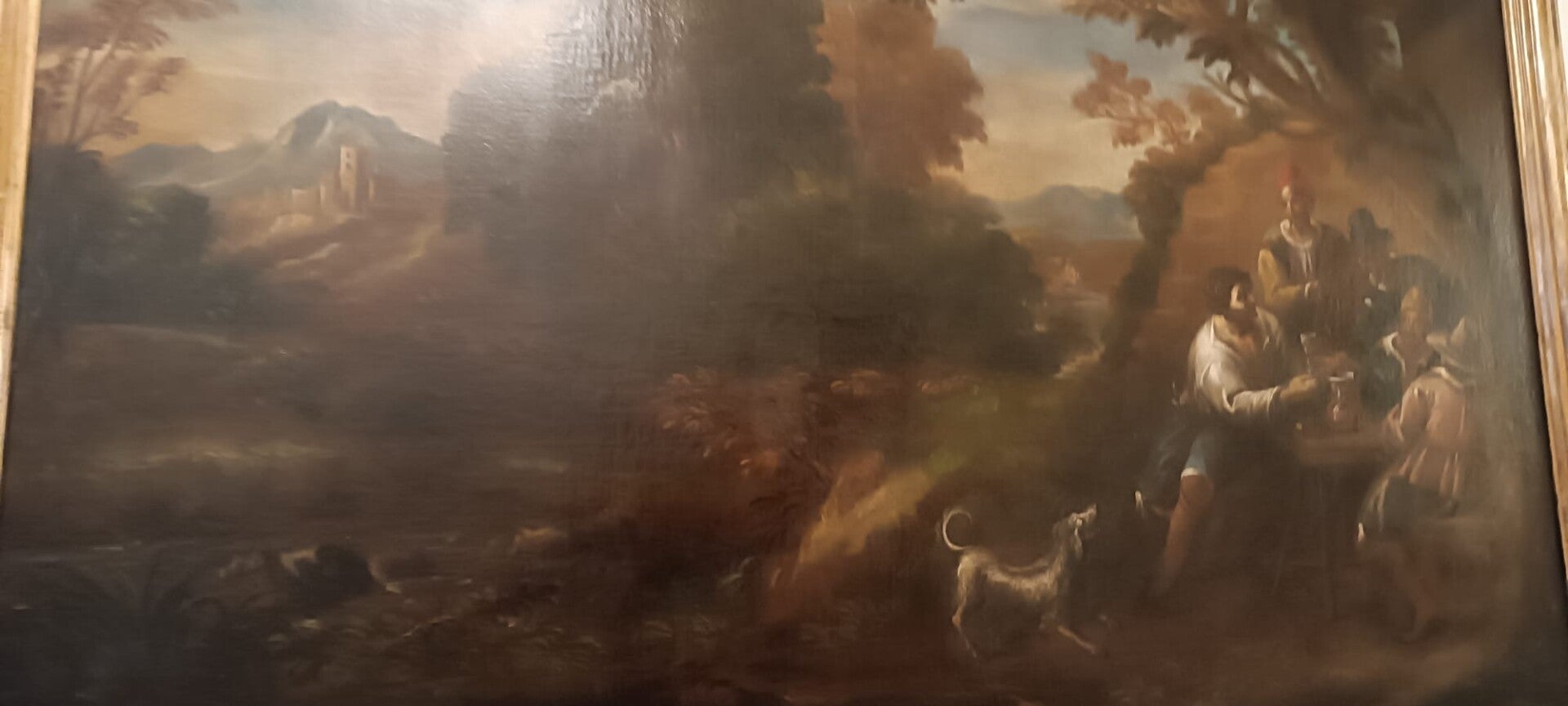
This captivating composition beautifully illustrates Dughet's ability to unite the majesty of nature with scenes of everyday life. In the foreground, a small group of travellers gathers beneath towering trees, while a faithful dog stands nearby, adding warmth and movement to the scene. Beyond them, a winding landscape unfolds towards distant mountains and a solitary tower, bathed in the soft golden light that characterises Dughet's finest works.
The painting embodies the tranquillity and harmony of the Classical Landscape tradition, inviting viewers to pause, reflect and immerse themselves in the timeless beauty of nature.
About the Artist
Gaspard Dughet, also known as Gaspard Poussin, was born in Rome in 1615 and became one of the foremost landscape painters of the Baroque period.
Working almost exclusively in Italy, he drew inspiration from the Roman countryside, transforming natural scenery into idealised landscapes that balanced grandeur, serenity and human presence. His paintings were admired by princes, cardinals and aristocratic collectors throughout Europe and continue to be celebrated in many of the world's leading museums.
Dughet's close association with his brother-in-law, the renowned painter Nicolas Poussin, helped establish the Classical Landscape as one of the defining artistic achievements of the seventeenth century.
Artistic Features
This exceptional work displays many of the characteristics that distinguish Dughet's mature style:
- Original oil on canvas
- Classical pastoral landscape
- Dramatic mountain scenery
- Ancient tower and rural architecture
- Figures gathered in conversation beneath mature trees
- Rich atmospheric perspective
- Warm Baroque colour palette
- Carefully balanced composition
- Original carved and gilded wooden frame
The contrast between the intimate gathering of figures and the vast surrounding landscape creates a sense of harmony between humanity and nature—a hallmark of Dughet's artistic vision.
Symbolism and Interpretation
During the Baroque period, landscapes such as this were more than scenic views. They conveyed ideals of peace, reflection and the beauty of rural life.
The travellers resting beneath the trees symbolise hospitality and companionship, while the expansive countryside evokes freedom, contemplation and the enduring rhythms of nature. The distant tower serves as both a visual anchor and a reminder of Europe's historic landscapes, where villages, castles and fortified settlements shaped everyday life.
Together, these elements create a composition that is both visually striking and rich in meaning.
Historical Significance
Gaspard Dughet helped elevate landscape painting into one of the most respected artistic genres of the seventeenth century. His works influenced generations of painters across Europe and became highly sought after by collectors for their elegance, technical brilliance and poetic atmosphere.
Today, his paintings are represented in major museums and distinguished private collections, reflecting their enduring importance within the history of European art.
Provenance
This original painting forms part of the private Heritage Collection of Moonstone Boutique Living and has been carefully preserved as an authentic work by Gaspard Dughet (1615–1675).
Its presence within our collection reflects Moonstone's commitment to preserving important works of European art while allowing guests to experience history in an intimate and welcoming setting.
For centuries, paintings such as this have inspired collectors, scholars and art lovers alike. Today, we are proud to share this remarkable masterpiece with visitors from around the world.
Did You Know?
Gaspard Dughet often included small groups of figures, shepherds or travellers within his landscapes—not as the main subject, but to provide scale and to emphasise the grandeur of the surrounding natural world. This subtle integration of human life into vast landscapes became one of the defining characteristics of his work and greatly influenced European landscape painting for generations.
Preserved at Moonstone Boutique Living Guesthouse
At Moonstone Boutique Living, every antique and work of art contributes to the story of the house. This original painting by Gaspard Dughet enriches our Heritage Collection by offering guests the opportunity to experience an authentic masterpiece of seventeenth-century Baroque landscape painting within a setting that celebrates history, culture and timeless elegance.
Object Details
Title: Pastoral Landscape with Figures
Artist: Gaspard Dughet (1615–1675)
Medium: Oil on Canvas
Period: 17th Century (Baroque)
Origin: Rome, Italy
Style: Classical Landscape with Pastoral Figures
Frame: Original carved and gilded wooden frame
Collection: Moonstone Boutique Living Guesthouse – Heritage Collection
The Corinthian Capital
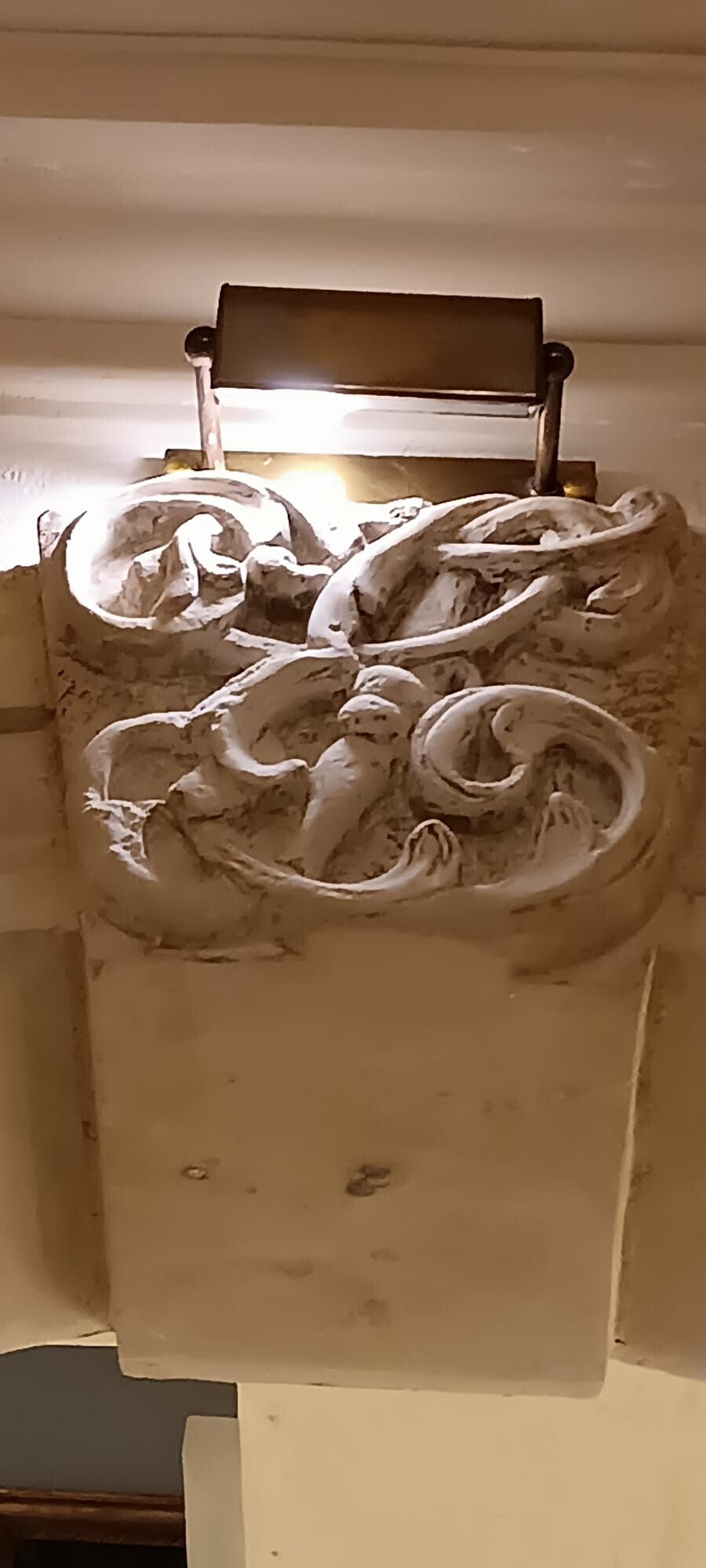
An Original Architectural Feature of Moonstone Boutique Living
One of the architectural treasures preserved within Moonstone Boutique Living is this beautifully carved Corinthian-style limestone capital, an original feature that has crowned the building for generations.
Hand-carved from Malta's renowned Globigerina limestone, the capital is richly decorated with elegant scrolls and flowing acanthus leaves, reflecting one of the most celebrated architectural traditions of the Classical world.
For over two thousand years, Corinthian capitals have symbolised refinement, beauty and exceptional craftsmanship. Their intricate foliage and graceful proportions first appeared in ancient Greece before being embraced by the Romans, who made them one of the defining features of monumental architecture throughout the Mediterranean.
A Legacy of Maltese Craftmanship
Throughout the centuries, Maltese master stonemasons became renowned for their extraordinary ability to transform the island's soft limestone into works of art.
During the rule of the Knights of St John and well into the nineteenth century, decorative capitals such as this adorned prestigious palaces, noble residences and important civic buildings across Malta.
Each example was individually carved by hand, making every capital unique.
The exceptional quality of Maltese stone carving remains one of the defining characteristics of the island's architectural heritage.
Architectural Features
This original capital displays many of the classical elements associated with the Corinthian order:
- Hand-carved Maltese limestone
- Flowing acanthus leaves
- Elegant scrolling volutes
- Symmetrical composition
- Original architectural proportions
- Classical decorative detailing
The acanthus leaf, which dominates the design, has been used in architecture since antiquity as a symbol of enduring life, beauty and artistic excellence.
Did You Know?
According to the Roman architect Vitruvius, the Corinthian capital was inspired by a basket placed on the grave of a young woman, around which acanthus leaves had grown. This story became one of the best-known legends in the history of classical architecture and helped establish the Corinthian order as the most ornate of the three classical architectural styles.
Preserved at Moonstone Boutique Living Guesthouse
At Moonstone Boutique Living, this original architectural feature serves as a reminder of the artistry that has shaped Malta's built heritage for centuries.
Rather than replacing these historic details during restoration, they have been carefully preserved so that every guest can appreciate the craftsmanship of the master stonemasons who created them.
Today, this beautifully carved capital continues to embody the elegance and timeless character that define Moonstone Boutique Living.
Object Details
Object: Corinthian-style Architectural Capital
Origin: Malta
Material: Hand-carved Globigerina Limestone
Style: Classical Corinthian
Period: Historic architectural element (exact date unknown)
Collection: Original architectural feature of Moonstone Boutique Living Guesthouse
Portrait of a Young Lady

By Giuseppe Calì (1846–1930)
One of the highlights of the Moonstone Boutique Living Heritage Collection is this remarkable original oil painting by Giuseppe Calì (1846–1930), Malta's most celebrated nineteenth-century painter and one of the country's greatest artistic masters.
Renowned for his exceptional portraits, historical compositions and monumental church paintings, Calì possessed a remarkable ability to capture both the elegance and individuality of his subjects. In this refined portrait, a young lady is depicted standing gracefully within a tranquil garden, her confident posture and thoughtful expression reflecting the dignity and sophistication that characterised Calì's finest portrait commissions.
The rich drapery, harmonious colours and subtle treatment of light demonstrate the artist's mastery of academic painting and his lifelong commitment to artistic excellence.
About the Artist
Born in Valletta in 1846, Giuseppe Calì studied at the Academy of Fine Arts in Naples, where he was influenced by the Italian Realist and Romantic traditions before returning to Malta to establish himself as the island's leading painter. Throughout a career spanning more than fifty years, he transformed Maltese art through his technical brilliance and extraordinary productivity.
His works include:
- Monumental church decorations throughout Malta and Gozo.
- Portraits of distinguished Maltese families.
- Historical paintings.
- Landscapes and private commissions.
- Decorative works for palaces and noble residences.
Today, his paintings form an essential part of Malta's artistic heritage and are preserved in museums, churches and important private collections.
Artistic Features
This original painting beautifully illustrates Calì's distinctive style:
- Original oil on canvas
- Full-length portrait
- Elegant garden setting
- Richly modelled drapery
- Warm natural palette
- Refined academic composition
- Classical balance and proportion
- Original gilded frame
The composition reflects Calì's remarkable ability to combine realism with elegance, creating portraits that remain timeless more than a century after they were painted.
Historical Significance
Giuseppe Calì transformed the artistic landscape of Malta. His influence extended far beyond his own paintings through his teaching and mentorship of younger artists, helping to shape the development of modern Maltese art. His prolific output and exceptional craftsmanship earned him the affectionate nickname "Ix-Xitan tal-Pinzell" ("The Devil of the Brush"), a tribute to both his speed and extraordinary talent.
Provenance
This original painting forms part of the private Heritage Collection of Moonstone Boutique Living and has been carefully preserved as an authentic work by Giuseppe Calì (1846–1930).
Its presence within our collection reflects Moonstone's commitment to safeguarding Malta's artistic and cultural heritage. Guests are invited to experience this masterpiece in the unique setting of a historic Maltese residence, where art and history come together to create an unforgettable atmosphere.
Object Details
Title: Portrait of a Young Lady (display title)
Artist: Giuseppe Calì (1846–1930)
Medium: Oil on Canvas
Date: Late 19th Century
Origin: Malta
Style: Academic Portraiture / Realism
Frame: Original gilded wooden frame
Collection: Moonstone Boutique Living Guesthouse – Heritage Collection
The Dancing Muse

Bronze Sculpture by Aldo Vitaleh
Gracefully displayed within Moonstone Boutique Living, this elegant bronze sculpture by the Italian artist Aldo Vitaleh captures the timeless beauty of the female form through movement, balance and artistic expression.
The sculpture portrays a graceful young woman reaching skyward in a dynamic pose, her body appearing almost suspended in motion. Every flowing contour and carefully sculpted detail reflects the artist's appreciation for classical beauty, while the expressive composition evokes freedom, elegance and vitality.
Mounted upon a polished marble base, this remarkable work is an excellent example of contemporary bronze craftsmanship inspired by the great European sculptural traditions.
About the Artist
Aldo Vitaleh is an Italian sculptor whose bronze works are recognised for combining classical inspiration with the flowing elegance of the Art Nouveau and Art Deco movements. His sculptures frequently celebrate the beauty of the human figure, portraying dancers, mythological subjects and graceful female forms through dynamic compositions and finely modelled bronze.
His works are appreciated by collectors for their refined craftsmanship and are found in private collections around the world.
Artistic Features
This sculpture beautifully illustrates Vitaleh's distinctive style:
- Original bronze sculpture
- Signed by the artist Aldo Vitaleh
- Elegant female figure in motion
- Rich brown patina
- Classical anatomical proportions
- Dynamic Art Nouveau-inspired composition
- Polished marble display base
- Fine hand-finished detailing
The flowing lines and upward movement create an impression of weightlessness, transforming bronze into a sculpture full of life and grace.
Symbolism
Throughout the history of European art, the female figure has represented beauty, inspiration and renewal.
In this composition, the figure's upward-reaching gesture symbolises aspiration, freedom and the limitless potential of the human spirit. The graceful movement of the body and the subtle drapery evoke harmony between strength and elegance, inviting viewers to appreciate both the physical beauty of the sculpture and the emotions it conveys.
The Art of Bronze Casting
Bronze has been one of the most prestigious materials used by sculptors since antiquity. Through the traditional lost-wax casting process, artists are able to reproduce the finest details of their original models while creating sculptures capable of lasting for centuries.
The rich bronze patina enhances the sculpture's depth and texture, giving the figure warmth and vitality while protecting the surface for future generations.
Preserved at Moonstone Boutique Living Gueshouse
This signed bronze sculpture forms part of the Moonstone Boutique Living Heritage Collection, where it contributes to an atmosphere of elegance, culture and artistic appreciation.
Together with the property's collection of original paintings, antiques and architectural features, it reflects Moonstone's commitment to preserving works of enduring beauty and craftsmanship for guests to enjoy.
Object Details
Title: The Dancing Muse (display title)
Artist: Aldo Vitaleh
Origin: Italy
Period: Contemporary
Material: Cast Bronze
Technique: Lost-Wax Bronze Casting
Style: Classical Figure with Art Nouveau Influence
Base: Polished Marble
Collection: Moonstone Boutique Living Guesthouse – Heritage Collection
The Cherub Torch Wall Sconce

A Refined Piece of 19th-Century European Heritage
One of the distinctive decorative pieces within the Moonstone Boutique Living Heritage Collection is this magnificent European Cherub Torch Wall Sconce, an impressive example of late 19th-century decorative art combining sculptural craftsmanship, symbolism and functional lighting.
The centrepiece features a beautifully modelled group of cherubs or putti, each holding an elevated torch. Their flowing forms, expressive features and elaborate drapery create a dynamic composition characteristic of the Romantic and Neoclassical Revival traditions of the period.
The six illuminated torch-style fittings are complemented by frosted glass shades, producing a warm and atmospheric glow that enhances the sculptural details of the figures.
More than simply a lighting fixture, the sconce was designed as a decorative statement, bringing together sculpture, symbolism and illumination. Its theatrical composition would have been particularly suited to grand residences, salons, entrance halls and other refined European interiors.
The Cherubs and Their Symbolism
The figures represented on the sconce are cherubs, or putti, a recurring motif throughout European decorative art.
Putti are traditionally depicted as youthful, winged or angelic figures and have been used extensively in European painting, sculpture, architecture and furniture since the Renaissance.
Depending on their context, cherubs can represent:
- Innocence and purity.
- Youth and beauty.
- Love and affection.
- Joy and celebration.
- Divine protection.
- Artistic and spiritual inspiration.
Their use in decorative lighting was particularly effective because the figures appear to physically carry the flames, transforming the practical function of the light into part of the sculpture itself.
Artistic Features
This impressive wall sconce displays a number of notable decorative characteristics:
- Six torch-style lights.
- Sculptural cherub/putti figures.
- Elaborate flowing drapery.
- Classical and Romantic decorative vocabulary.
- Intricate sculptural modelling.
- Cast metal or bronze construction.
- Frosted glass torch shades.
- Dark antique-style patina.
- Highly decorative wall-mounted composition.
- Strong vertical and symmetrical visual presence.
The combination of sculptural figures and functional lighting creates a particularly dramatic effect when illuminated.
Historical Significance
During the 19th century, decorative lighting became an increasingly important element of European interior design. The development of improved lighting technologies allowed chandeliers, sconces and candelabra to become increasingly elaborate works of decorative art.
Historic European interiors frequently incorporated lighting fixtures featuring classical figures, cherubs, mythological subjects, floral ornamentation and architectural motifs.
The Romantic period encouraged a renewed fascination with emotion, symbolism, historical styles and decorative richness. At the same time, the Neoclassical Revival continued to draw inspiration from the art and architecture of ancient Greece and Rome.
This sconce reflects that fascination with the past, combining classical imagery with the craftsmanship and decorative ambition of the late 19th-century European interior.
Craftsmanship
The sculptural body of the sconce demonstrates the importance placed on decorative metalwork during this period.
The cherubs, drapery and ornamental elements would have required careful modelling before being reproduced in metal. The resulting three-dimensional composition allows the figures to project dramatically from the wall while supporting the individual torch fittings.
The dark finish gives the piece the appearance of an aged bronze or antique patinated metal surface, enhancing the depth of the carving and modelling.
The frosted glass shades soften the light and create a warm glow, allowing the sculptural details to remain visible without overwhelming the surrounding interior.
The Six Torch Lights
A particularly striking feature of the piece is its arrangement of six torch-style lights.
Rather than simply mounting conventional lamps onto the sculpture, the lights form an integral part of the composition, with the cherubs appearing to hold the torches aloft.
This theatrical approach reflects the tradition of European decorative lighting, where the light source itself was often incorporated into the artistic narrative of the object.
When illuminated, the frosted shades create a warm golden effect across the surrounding wall, emphasising the figures and creating a welcoming atmosphere.
Preserved at Moonstone Boutique Living
This remarkable cherub torch wall sconce forms part of the Moonstone Boutique Living Heritage Collection, where it contributes to the distinctive historic character of the property.
Carefully preserved and maintained, the piece represents the meeting of European sculpture, decorative arts and historic interior design.
Within Moonstone Boutique Living, the sconce is more than a source of illumination. It is an architectural and decorative feature that helps recreate the atmosphere of an elegant European interior, allowing guests to experience historic design within the intimate setting of a boutique residence.
Object Details
Title: The Cherub Torch Wall Sconce
Type: Sculptural Wall Sconce
Period: Late 19th – Early 20th Century
Origin: Europe
Style: Romantic / Neoclassical Revival
Subject: Cherubs / Putti with Torches
Materials: Cast metal / bronze; frosted glass
Lighting: Six torch-style lights
Dimensions: Approximately 75 cm (H) × 60 cm (W) × 20 cm (D)
Finish: Dark antique/patinated finish
Collection: Moonstone Boutique Living – Heritage Collection
The Grand Eagle Hall Mirror

A Symbol of Elegance and Prestige
Standing proudly within Moonstone Boutique Living, this magnificent Grand Eagle Hall Mirror is one of the property's most striking decorative features, combining fine craftsmanship with timeless European elegance.
Beautifully hand-carved and richly ornamented, the mirror is crowned by a majestic gilded eagle with outstretched wings, symbolising strength, protection and nobility. The graceful Rococo-inspired scrollwork, flowing lines and delicate side shelves create a harmonious composition that transforms a functional mirror into a remarkable work of decorative art.
For generations, mirrors of this calibre welcomed guests into grand residences, reflecting both natural light and the refined taste of their owners.
A Reflection of European Craftsmanship
During the nineteenth century, grand entrance hall mirrors became an essential feature of aristocratic homes, boutique palaces and prestigious townhouses throughout Europe.
Designed to make entrance halls appear brighter and more spacious, these mirrors also served as statements of wealth and sophistication. Their elaborate carvings required the skills of master woodcarvers, gilders and cabinetmakers, each contributing to a piece that combined architecture, sculpture and furniture into one elegant creation.
Artistic Features
This exceptional mirror displays many of the characteristics associated with fine European decorative arts:
- Original hall mirror with integrated display shelves
- Hand-carved wooden frame
- Rococo Revival scrollwork
- Gilded eagle crest with outstretched wings
- Elegant symmetrical composition
- Decorative side brackets
- Original mirror plate
- Rich painted and gilded finish
The eagle, positioned at the summit of the mirror, provides both visual balance and symbolic importance, making this one of the most distinctive decorative objects within the Heritage Collection.
Symbolism
Throughout European history, the eagle has represented courage, wisdom and guardianship.
Placed above the mirror, it symbolises protection over the home and those who enter it. The flowing scrolls and graceful curves surrounding the frame soften the composition, creating a perfect balance between strength and elegance.
The mirror's integrated shelves were traditionally used to display decorative objects, fine porcelain, candles or fresh flowers, adding warmth and refinement to the entrance of a distinguished residence.
Historical Significance
Mirrors of this style became highly desirable during the Rococo Revival movement of the nineteenth century, when Europe's craftsmen looked once again to the ornate decorative traditions of the eighteenth century.
Large entrance mirrors were often commissioned for prestigious homes and boutique hotels, where they reflected chandeliers and natural light to create an atmosphere of grandeur and hospitality.
Today, original examples remain highly sought after for their artistic beauty and architectural presence.
Preserved at Moonstone Boutique Living Guesthouse
At Moonstone Boutique Living, this remarkable hall mirror continues to fulfil its original purpose—welcoming every guest with elegance and timeless sophistication.
Carefully preserved as part of our Heritage Collection, it reflects not only the beauty of its surroundings but also the rich artistic traditions that continue to define the unique character of Moonstone.
Object Details
Object: Grand Eagle Hall Mirror
Origin: Europe
Estimated Period: Late 19th to Early 20th Century
Style: Rococo Revival
Materials: Hand-carved wood, original mirror plate, painted and gilded finish
Features: Decorative shelves, gilded eagle crest, Rococo scrollwork
Collection: Moonstone Boutique Living Guesthouse – Heritage Collection
The Rococo Gilt Wall Sconce

A Masterpiece of European Decorative Lighting
Among the elegant decorative treasures of Moonstone Boutique Living is this magnificent Rococo-style gilt wall sconce, an exceptional example of European craftsmanship inspired by the grandeur of the eighteenth century.
Richly decorated with flowing scrolls, acanthus leaves and ornate floral motifs, this impressive light fitting embodies the elegance and sophistication that defined Europe's most luxurious palaces and noble residences.
Originally inspired by candlelit interiors, the sconce now continues its historic role by illuminating the rooms of Moonstone Boutique Living with a warm and inviting glow, preserving the timeless charm of classical design.
A Legacy of Rococo Elegance
The Rococo style emerged in France during the early eighteenth century as a celebration of movement, lightness and artistic refinement. Unlike the symmetry of earlier Baroque decoration, Rococo embraced flowing curves, natural forms and richly ornamented surfaces.
Grand wall sconces such as this became symbols of luxury, decorating the salons, reception rooms and staircases of aristocratic homes throughout Europe. Their intricate carving and gilded finish reflected candlelight, creating interiors filled with warmth and brilliance.
Artistic Features
This remarkable wall sconce displays many of the defining characteristics of Rococo decorative art:
- Rich Rococo scrollwork
- Elaborate acanthus leaf decoration
- Multi-arm candle-style lighting
- Hand-carved decorative detailing
- Gilded finish
- Elegant asymmetrical composition
- Classical floral ornamentation
- Grand architectural presence
The combination of flowing curves and richly sculpted ornament creates a striking visual effect, making the piece both a functional light fitting and a work of art.
Symbolism
The acanthus leaf, one of the oldest decorative motifs in European art, symbolises endurance, prosperity and artistic achievement.
The scrolling forms suggest movement and vitality, while the gilded finish reflects the importance of light as both a practical necessity and a symbol of warmth, hospitality and celebration.
Together, these elements express the elegance and refinement that have long characterised Europe's grand interiors.
Historical Significance
During the eighteenth century, decorative lighting became an essential element of interior architecture. Master craftsmen collaborated with woodcarvers, gilders and metalworkers to produce magnificent wall sconces that complemented mirrors, chandeliers and ornate ceilings.
By the nineteenth century, the Rococo Revival brought renewed appreciation for these designs, and many exceptional examples were created for prestigious residences, luxury hotels and public buildings.
Today, original Rococo Revival lighting remains highly sought after by collectors and interior designers for its artistic beauty and historical importance.
Preserved at Moonstone Boutique Living Guesthouse
This elegant wall sconce forms part of the Moonstone Boutique Living Guesthouse Heritage Collection, where it continues to illuminate the historic interiors much as it has done for generations.
Carefully preserved alongside original paintings, antique mirrors, sculptures and architectural features, it reflects Moonstone's commitment to celebrating Malta's rich architectural heritage and the timeless beauty of European decorative arts.
Object Details
Object: Rococo Gilt Wall Sconce
Origin: Europe
Estimated Period: Late 19th to Early 20th Century
Style: Rococo Revival
Materials: Hand-carved wood or composition with gilded finish and metal light arms
Lighting: Six candle-style lights
Collection: Moonstone Boutique Living Guesthouse – Heritage Collection
The Neoclassical Display Cabinet

Elegance in Wood and Marble
Among the refined furnishings of Moonstone Boutique Living is this distinguished Neoclassical display cabinet, an elegant piece that reflects the timeless sophistication of European cabinetmaking.
Crafted from richly polished hardwood and crowned with a graceful architectural cornice, the cabinet combines beauty with practicality. Its glazed upper section, framed by delicate geometric tracery, was designed to display treasured porcelain, crystal, silver or family heirlooms, while the lower cupboards provided discreet storage.
Resting beneath the display section is a finely polished marble shelf, adding both luxury and durability to the design. Together, these elements create a harmonious piece that perfectly embodies the balance and refinement of Neoclassical furniture.
A Tradition of European Cabinetmaking
During the late nineteenth and early twentieth centuries, master cabinetmakers looked to the architecture of Ancient Greece and Rome for inspiration. The resulting Neoclassical style favoured symmetry, clean proportions and restrained ornamentation, offering an elegant contrast to the elaborate decoration of the Rococo period.
Display cabinets such as this became essential furnishings in prestigious homes across Europe, where they showcased collections of porcelain, glassware, books and decorative objects while reflecting the owner's appreciation for fine craftsmanship.
Artistic Features
This exceptional cabinet displays many of the defining characteristics of Neoclassical design:
- Original hardwood construction
- Glazed display cabinet with decorative wooden tracery
- Architectural cornice
- Classical columns with gilded Corinthian capitals
- Polished marble serving shelf
The cabinet's understated elegance allows both the furniture itself and the objects displayed within it to become part of the room's overall beauty.
Symbolism
The cabinet's classical columns and balanced proportions symbolise stability, order and refinement—qualities that have been associated with Neoclassical design for centuries.
The marble shelf reflects the enduring use of natural stone in European interiors, adding a sense of permanence and luxury while providing a practical surface for serving or display.
Historical Significance
During the Victorian and Edwardian periods, display cabinets became an important feature of elegant homes throughout Europe.
They served not only as practical storage but also as a means of presenting family treasures, imported porcelain, silver collections and works of art. The finest examples were crafted by skilled cabinetmakers using carefully selected hardwoods and traditional joinery techniques that have ensured their survival for generations.
Today, original cabinets of this quality continue to be admired for their craftsmanship, functionality and timeless elegance.
Preserved at Moonstone Boutique Living Guesthouse
This original display cabinet forms part of the Moonstone Boutique Living Guesthouse Heritage Collection, where it contributes to the atmosphere of refinement and historical authenticity that defines the house.
Beautifully preserved, it stands as a testament to the artistry of European furniture makers and reflects Moonstone's commitment to celebrating the craftsmanship of the past while welcoming guests in comfort and style.
Object Details
Object: Neoclassical Display Cabinet (Vitrine)
Origin: Europe
Estimated Period: Late 19th to Early 20th Century
Style: Neoclassical / Louis XVI Revival
Materials: Hardwood, glass, marble and gilt bronze decorative mounts
Features: Glazed upper display cabinet, marble serving shelf, lower storage cupboard, classical columns with Corinthian capitals
Collection: Moonstone Boutique Living Guesthouse – Heritage Collection